Which part
Element, orthermostat.
These signs point at the part before anyone takes a cover off.
01
Warm but never hot
The element is still working but the heat is not reaching the water, because the sheath is wrapped in a scale layer that insulates it. The water feels tepid and never quite gets to a comfortable shower temperature however long you wait.
02
The temperature drifted
The tank used to give the same temperature at the same setting, and now it is colder or hotter with the dial untouched. The thermostat has drifted off its reading, and that is a part you replace rather than adjust.
03
A new element failed early
When an element burns out again soon after it was changed, the part itself is rarely the reason. A floor full of sediment or a thermostat that will not switch off will cook any new element, which is why both get checked with every replacement.
04
A weep at the flange
Water seeping around the plate after a change means the gasket is tired or was seated on a face that was not cleaned. This is not the tank leaking. A fresh gasket, a cleaned face and even tightening across the bolts settles it.
Parts at a glance
The two parts.
Service
Heater element and thermostat replacement
Parts
Element, thermostat, thermal cut out and flange gasket
Fits
Central cylinders and small wall heaters alike
Before fitting
We measure the old part and inspect the tank floor
Hours
Daily, 6:00 in the morning to 12:00 midnight
Fitting
How a part ischanged.
Four steps, and each one is there for a reason rather than out of habit.
We confirm the part
Before anything is undone we read the element, the thermostat and the cut out. The meter names the failed part, and some heaters come back with both of them gone.
We drop the water level
The element comes out of a flange on the body of the tank, so the water has to fall below it first. A thermostat is reached from outside and needs none of this.
We fit an element that matches
The replacement has to be the same length, the same power and the same connection as the one that came out, so it clears the tank floor and suits the circuit already there.
We tighten evenly and pressure test
A new gasket goes on, the bolts are tightened evenly and in turn, and the tank is filled so we can watch the flange under pressure before the power goes anywhere near it.
Inside the tank
What each partactually does.
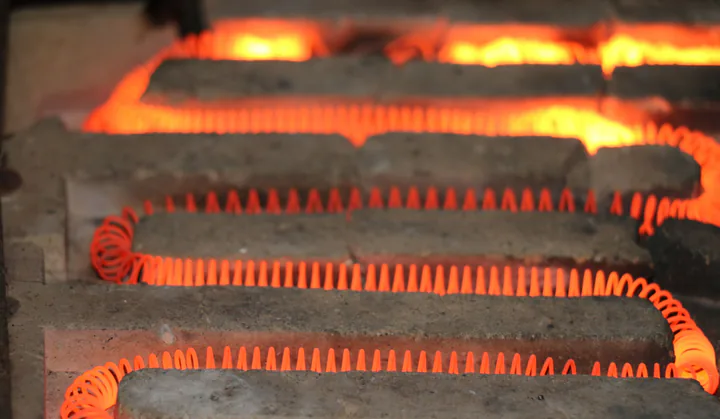
An element is a metal rod that sits down inside the cylinder, bolted to a flange with a gasket between them. A replacement has to match the one it follows in length, in power and in the way it connects. Too long and it sits in the sediment on the floor. More power than the existing circuit was built for and the cable and the breaker are carrying a load nobody sized them for.
The sheath is the weak point. Scale on it stops the heat moving into the water, so the heat stays in the rod, the temperature inside climbs, and either the wire parts or the sheath splits. That is why changing an element without cleaning the tank floor buys you the same fault a second time.
A thermostat is a sensor sitting in a pocket against the tank wall. It makes and breaks the supply around a set point. Most heaters carry a separate thermal cut out beside it that kills everything if the water climbs past a limit. The cut out is not a fault on its own. It is a result: it trips because something ahead of it did not switch off.
So both parts get looked at together, and the floor of the tank with them. The most common second call we get is a heater that had only its element changed: the old thermostat cooked the new one, or the sediment left on the floor had it working inside an insulating blanket from the first day.
External links for referenceMinistry of Electricity and Water (electricity and water supply to the building)
Parts questions
Asked about thetwo parts.
The element is what heats. The thermostat is what decides when it runs and when it stops. Lose the element and nothing heats at all. Lose the thermostat and the heating runs without control: either it never starts or it never switches off.
No. We change the part the meter condemns. But when the thermostat is the reason the element burned, replacing one without the other repeats the fault, and that case is explained before the work starts so the decision is yours.
Yes, as long as it matches the one coming out: the same length, the same power and the same connection, with a new flange gasket alongside it. If the length or the power differs, it either sits wrong inside the tank or loads a circuit that was never sized for it.
No. A dial at its top setting with only tepid water means the element is buried in scale, or one of the two has failed in a heater that carries more than one. The dial is asking for heat that the part can no longer deliver.
Not until the cylinder is full and the air has been bled out. Firing an element that is not covered by water destroys it immediately, which is how a fresh replacement fails before anyone has left the house. We fill, vent and switch on in front of you.