First signs
When the problem isin the drains.
Not every pool of standing water is a blockage. These signs say the problem is drainage rather than supply.
01
Water comes up, not down
Any water rising back out of a toilet, a gully or a kitchen drain means the pipe below it cannot take what is going in. That is the waste side, not the clean water supply.
02
The smell arrives first
Sewer smell shows up days before anything overflows. If you notice it while everything still drains, the cause is usually a trap or a vent rather than a full blockage.
03
Gurgling before the slowdown
A gurgle from the gully when you empty a basin means air is forcing its way past a narrowing run. It is the earliest warning, and it comes well before the line stops.
Inside the field
All nine, in oneplace.
Each one has its own page, and one number reaches all of them.
The order
How any drainagejob runs.
The same order on all nine, and only the kit changes.
We locate the standing water
What you describe on the call tells us whether one branch is affected or the shared line is, and that decides whether we come with rods or with the tanker.
We open the nearest access
A gully, an inspection chamber or a manhole, depending where the trouble is. The level we find there says whether the blockage sits before that point or after it.
We work the cause, not the symptom
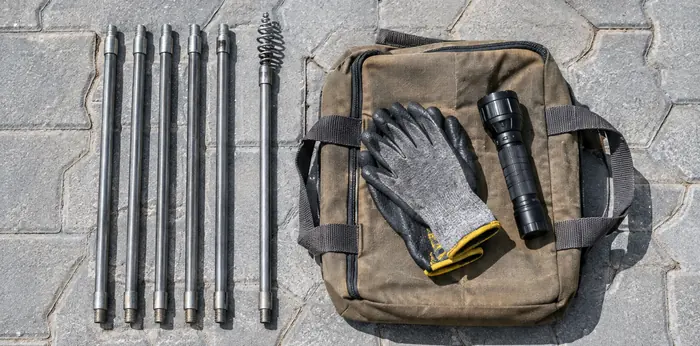
Grease, hair and wipes come out with rods and the snake. A line standing full underneath needs the tanker first, and a crack or a bad fall needs work on the pipe itself.
We run water and hand over
We run water from the highest point and watch it pass in front of you, then tell you exactly what came out and whether it needs looking at again.
The field in short
Nine services, onefield.
Field
Drainage and sewage work
What it covers
Nine services, from the gully to the cesspit
Where it applies
Houses, flats, blocks, complexes and chalets
The kit
Drain rods, a small electric snake and a tanker
Coverage
Every area of Kuwait, all six governorates
Hours
Daily, 6:00 in the morning to 12:00 midnight
How the drain runs
The path water takesout of a house.
Every opening in a Kuwaiti house sits over a trap, and the trap holds a small body of water that seals the smell out of the room. A short branch leaves the trap, and all the branches meet in a wider line under the building. The narrow branches are the ones a hair and a bar of soap can block. The wide line is blocked only by something that has been building for months.
Outside the wall the line runs into an inspection chamber. Inside it a half round channel carries the flow across the base, with sloped concrete benching either side so anything landing on it washes back into the channel. When we lift the round cover and the channel is standing full, the trouble is downstream of the chamber and not upstream, and that changes the whole plan for the job.
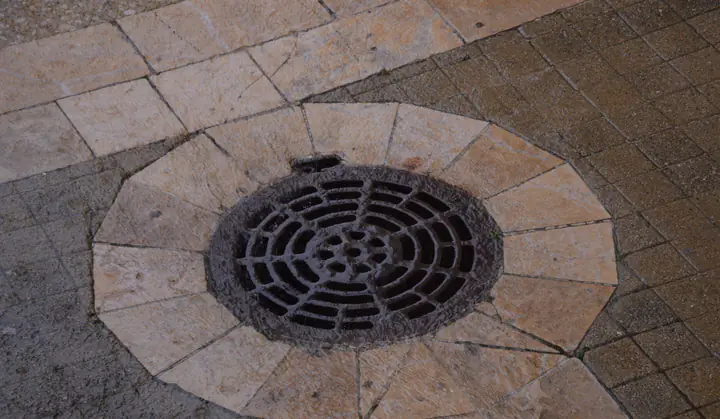
The yard and the street hold a different object altogether: the gully. A gully has no channel and no benching. Under its grating sits a pot holding a permanent body of standing water that seals the smell in, and the outlet leaves the side of the pot above that water line. That is why gullies fill with the sand and grit washed off interlock paving, rather than with grease.
At the end of the run there is either the public network or a cesspit. A full cesspit stops every line ahead of it, even when not one of them is blocked. So the first question is never what is blocked. It is where the water stopped, and the answer separates rods from a tanker, and one branch from the whole network.
External links for referenceKuwait Municipality (public health and drainage requirements)
Why us
Why call us.
01
One number for all of it
Unclogging, plumbing, heaters and leak detection from one place, not four different numbers.
02
Every area in Kuwait
We work across all six governorates, and we are based in Al-Qurain, Mubarak Al-Kabeer.
03
We pinpoint the exact spot
Acoustic leak detection and tank leak detection pinpoint the leak, so any breaking is at one spot.
04
Contracts, not only emergencies
Maintenance contracts for buildings and complexes, and sewer network servicing, not only call outs.
Common questions
Asked about thewhole field.
Start from how many places are affected. One means a branch, more than one means the shared line. If you cannot tell, describe what you see on the call and we will place it.
A gully collects surface water: an open grating on top, a pot of standing water below. A chamber is an access point on a working line: a solid cover on top, a half round channel below.
Cooking oil, wet wipes, tea bags, food waste, coffee grounds and beach sand. Each of them either sets on the pipe wall or drops into the gully pot and stays there.
Yes. Work on a block or a complex starts at the chamber and the manhole outside the building, and needs the caretaker or the management to reach the access points. Maintenance contracts exist when it keeps returning.
A leak on the clean water side is leak detection, not drainage. Pressure, pumps and tanks sit under plumbing. The same number reaches all of them, so there is nothing to look up again.