When you need suction
When rodding alonewill not do.
These signs say the trouble is a level, not a blockage.
01
Nothing drains anywhere at all
Every bathroom, the kitchen and the yard gullies stop together, not one or two of them. When all of it stands at once, what is full is downstream of the house rather than inside it.
02
The level reaches the cover
Open the manhole and look. If the water sits close under the cover or comes over it, the chamber itself is full, and a rod changes nothing because there is nowhere for the water to go.
03
The level holds after rodding
The run was opened and the level did not drop. That means the branch is clear but whatever receives it is standing, which is a full cesspit or a manhole not discharging to the network.
Suction in short
The tanker job, short.
Service
Pumping water and solids out by tanker
What we pump from
Cesspits, manholes and chambers standing full
Where it applies
Houses, chalets, blocks, complexes and work sites
What we need
A route the hose can reach from the street
After pumping
We watch the lines run again before leaving
Hours
Daily, 6:00 in the morning to 12:00 midnight
How pumping runs
From the call to adropping level.
Four steps, and the one before the tanker arrives matters most.
We ask about access first
Tell us the type of building and exactly where the manhole or cesspit sits, and whether a gate has to be opened. Access is what decides where the tanker stands.
We open and read the level
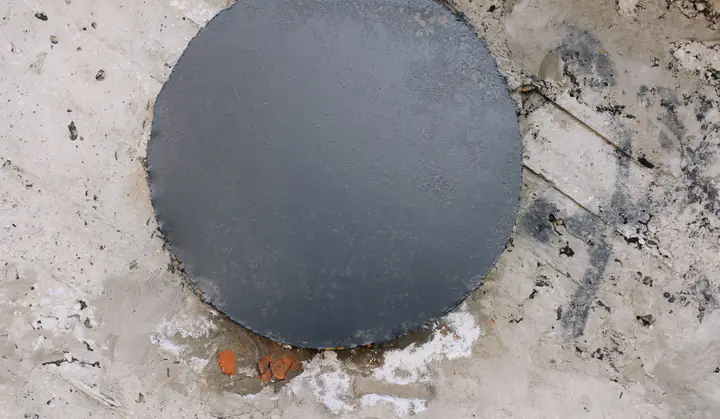
We lift the round cover and read the level against the pipe mouths. Water above the outlet mouth means the receiving line is standing, and that tells us how far the level must come down.
We draw it down to the base
The level comes down in stages until the channel or the base of the pit shows, and we take off what is floating first so it does not choke the hose.
We run water and watch flow
Once the level is down we run water from inside the house and watch it pass the channel, because a second blockage under the old level often shows only then.
Why pump at all
A full level is nota blockage.
Rodding and pumping are two different jobs. Rodding opens something standing inside a pipe. Pumping brings down a body of water collecting in a space that is already open. When a cesspit is full to the top, the pipe feeding it can be perfectly clear and still carry nothing, because water will not run into a space that has no room left.
This is the case we most often reach after the owner has already rodded it twice. Each time the branch opens and the backup returns, because the branch was never the cause. The first thing we do is open the last point on the run and read the level there, before a rod goes into anything.
Chalets and houses away from the public network rely on a cesspit, and a pit has a fixed capacity that fills according to how many people use it and what goes down. Summer heat makes it worse: evaporation concentrates what is inside and thickens the layer on top, which is why that layer comes off first.
Access matters more than anything else on this job. The tanker needs somewhere to stand and a hose run that reaches the opening, so we ask about the gate, the width of the drive and exactly where the manhole sits before anyone moves. For a block or a complex the caretaker has to be there to open the access points.
External links for referenceKuwait Municipality (public health and drainage requirements)
Questions
Asked about thetanker.
Open the cover and read the water against the inlet pipe mouth. If it has reached or covered that mouth, it is full. The other sign is everything in the house stopping together with no obvious cause.
No. The work happens at the manhole or the pit, and the tanker stands at the nearest point the hose reaches. All we need is a clear route to the opening and no car parked over it.
Either more goes in than it can hold, or water is reaching it from somewhere other than the drains, such as a leak or surface run off. We read the level and tell you which, because the fix is different.
Pumping brings the level down. Cleaning takes off the layer stuck to the walls and the base. They are two services and most cases need both, or the same state returns quickly.
We can follow the run from the last drainage point inside and find the access outside. If the opening has been paved or concreted over, we locate it before anything is opened up.