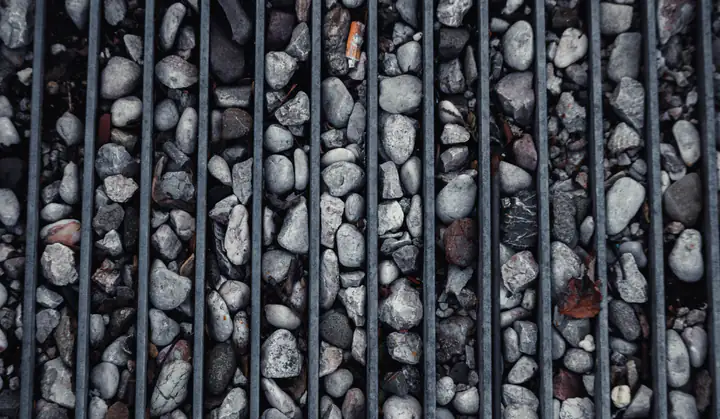
Gully signs
When the gully isthe problem.
A gully problem stays local, and these signs separate it from a blockage inside the house.
01
Water stands over the grating
You wash the yard or rain falls, and the water pools over the grating instead of dropping through. Inside the house everything drains as usual, because the gully is a run of its own.
02
Sand and silt under the bars
Lift the grating and look. A layer of sand, silt and paper means the pot has filled above the outlet, and nothing can move until the pot itself is emptied.
03
The smell is outside, not inside
A smell coming from the yard side rather than a bathroom usually means the standing water in the pot has evaporated in the heat, leaving the outlet open to the air.
Gullies in short
The gully job, short.
Service
Yard and street gully unclogging
Where it applies
House yards, driveways, car parks and chalets
Method
Lift the grating, empty the pot, clear the outlet
What comes out
Sand, paving grit, paper, leaves and silt
Coverage
Every area of Kuwait, across all six governorates
Hours
Daily, 6:00 in the morning to 12:00 midnight
How it works
Clearing a gully,pot and all.
Four steps, all from above, with nothing broken open.
We lift the grating out
The grating comes out of its frame with a hook, and we take off the paper and leaves sitting on it first, so none of it drops into the pot while we work.
We empty the pot to the base
We take out the standing water, then lift the sand and silt with a bucket and a scraper until the base shows and the outlet mouth in the side wall is visible.
We clear the outlet run
The outlet leaves the side of the pot above the water line. A rod goes in there and turns clockwise until it runs, because the branch beyond it usually holds the same deposit.
We refill the seal and test
We refill the pot with clean water so the seal is back, then pour a bucket over the grating and watch it drop away before the grating goes back in.
Why they block
A gully is not achamber.
A gully is a vertical pot under the grating, and it holds a body of water that never drains away. That water is the seal: it stops the air in the drain run from coming up into the yard. The outlet does not leave the base of the pot, it leaves the side wall above the water line, which is exactly what keeps the seal in place.
That shape is also the reason they block. Anything heavy that washes in drops to the base of the pot and stays: sand, the grit from interlock joints, silt, and the dust carried in on tyres and shoes. Only the light material floats out through the outlet. The heavy fraction builds season after season until it reaches the outlet and closes it.
Kuwait adds two more causes. Heat evaporates the seal in any gully that is not used, a chalet shut up for the season or a yard that never gets washed, so the smell comes up with nothing blocked at all. And the dust that settles on interlock paving goes straight into the gully the first time the yard is hosed or the rain falls.
Which is why cleaning the grating changes nothing. The bars stop large litter and that is all; the problem is always under them. Emptying the pot to its base and opening the outlet brings the full rate of flow back, not half of it. If a gully fills quickly and keeps doing it, the fall of the yard is usually steering all the grit towards it, and we will say so.
External links for referenceKuwait Municipality (public health and drainage requirements)
Questions
Asked aboutyard gullies.
Because the grating is not where the blockage is. The pot underneath fills with sand and silt until it reaches the outlet and closes it. Wiping the bars never touches the pot, and the pot has to come out to the base.
It does not help. Caustic products do nothing to sand and silt, and that is what fills the pot. They also attack the pipe and the iron grating. The pot has to be emptied by hand and the outlet rodded.
Yes. A cracked grating is a hazard to feet and tyres, and we fit one to the same size as the frame already there. If the frame itself has worked loose, it is bedded again before the grating goes back.
The water that seals the pot evaporates when a gully sits unused in the heat. Pour a bucket of water in first. If the smell comes back after that, the branch itself is the cause and we will come and look.
A gully inside your boundary or yard is ours to work on directly. One in the public street belongs to whoever maintains the road, but we can look and tell you whether it is the cause or something inside your line.