Three things decide
What decides itbefore you pour.
Three points separate the case where it helps from the case it makes worse.
01
What the blockage is made of
Acid works on hair, soap and grease. Wipes, cloth, sand and cement stay untouched, exactly where they sat.
02
Standing water above it
With water standing above it, the acid dilutes before reaching the blockage: a pool over nothing moved.
03
How far down it sits
Close to the trap it arrives strong. Further down a branch or main line it arrives weak, attacking the pipe.
Acid and the pipe
It opens a gap,not a fix
Acid drain opener is concentrated acid, not a cleaner: it heats, eats what it touches, and stops. It works on hair and grease, opening a channel and leaving the rest on the wall.
Most waste pipe in Kuwait is plastic. Reaction heat softens the rubber seals at joints, showing as damp later. Older metal pipe thins from the inside, and a dosed line narrows further.
When it is wrong
Two casesnot to pour
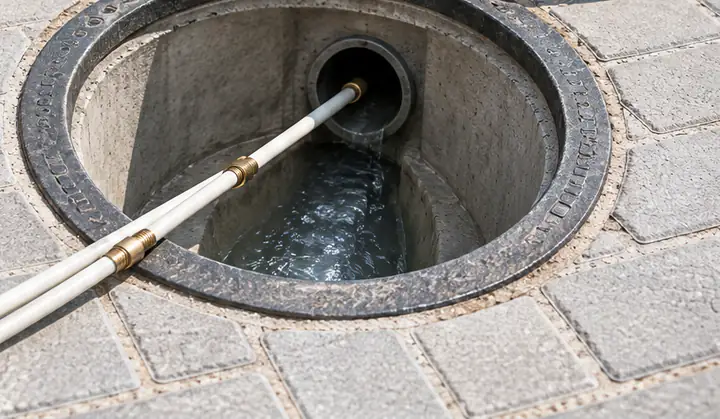
Standing water dilutes the acid, leaving a caustic pool and nothing moved, a toilet the same since the pan holds water. On the main line or chamber outside, the liquid arrives too weak to work.
The dangerous case is mixing products, or pouring then plunging or opening the trap by hand. Mixing gives off gas, plunging throws the liquid at you. If nothing moved, add nothing and tell us.
What to do instead
What to doinstead of pouring.
Start with a plunger, first blocking the overflow slot with a cloth so the pressure goes down the pipe. Firm strokes with water covering the head clear most blockages nearby.
Then the trap unscrews by hand over a bucket and yields the hair and soap behind it, safe only if nothing caustic went in first. If every fixture is heavy, or water returns elsewhere, the line is the problem. We work 6:00 to midnight.
About the bottle
Questions that comebefore the pour.
It narrows the mass until a small channel opens, so water moves. The rest stays on the wall, and it returns at the same spot.
Do not add a second product, plunge, or open the trap. Leave it alone and tell us acid is inside first.
The heat the reaction gives off matters more than the acid. It softens plastic and rubber seals at the joints, showing later as damp.