Plumbing and sanitary
Ramadan Drain CleaningToilet and cistern repair in Sulaibiya Industrial
Toilet and cistern repair in Sulaibiya Industrial usually begins when an owner notices water that will not stop running from the tank after flushing. Sulaibiya is an industrial zone of factories and workshops with heavy line pressure, and most buildings here are either older warehouses or vehicle repair shops with small adjacent staff quarters near the main road.
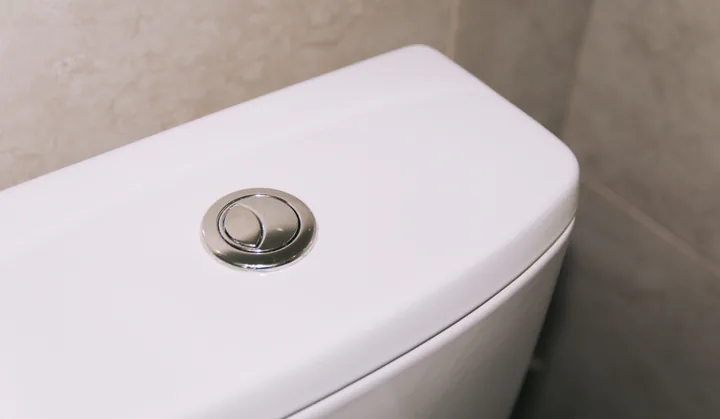
Toilet symptoms
Cistern and pansymptoms.
Four completely different cases, and each one sits on a different part.
01
A constant trickle inside
A running sound inside the cistern when nobody has flushed means the inlet valve is not closing fully, or the flush valve is passing into the pan. That water goes down the drain all day where you cannot see it.
02
The flush is weak
Needing to flush twice every time usually means the water level inside the cistern has dropped below where it should sit, or deposits are blocking the rim holes and killing the rush of water.
03
The pan rocks when used
Movement means the floor fixings have loosened or the floor under it is not flat. Constant rocking works the connection between the pan and the waste pipe loose, and the leak starts after that.
04
Water at the base
Wetness around the base has two possible sources: the seal between cistern and pan leaking from above, or the waste connection below the pan. Drying the area and watching where it returns tells them apart.
This area
What setsthis area apart
Most Sulaibiya workshops are simple single-storey buildings with one toilet and one cistern, and the tanks are small and easy to reach. The common problem here is that the high line pressure wears the tank valve faster than in a residential neighbourhood, and the cistern itself carries more load than it was designed for. Bathrooms in older workshops have basic, outdated flush mechanisms, and faults usually lie in the internal valve or the metal ball of the tank.
Sulaibiya Industrial sits in Jahra governorate, an industrial zone with high pressure on drain and water lines.
Workshop tanks fail faster because line pressure is higher than in residential areas, so the tank valve needs replacing more often within a year.
In short
The toilet work.
Service
Toilet pan and cistern repair
The parts
Inlet valve, float, flush valve, seal, pan connector
Types
Exposed cisterns, and concealed cisterns inside the wall
Where it applies
Houses, flats, blocks, complexes and chalets
Hours
Daily, 6:00 in the morning to 12:00 midnight
The method
From the lid tothe last flush.
A cistern is read with the lid off, never guessed at from outside.
We lift the lid and read it
The water level inside tells us a lot: sitting low means the flush will be weak, sitting high enough to enter the overflow means the valve is not closing.
We split filling from flushing
We close the angle valve and watch the level. If it falls on its own, the flush valve is passing into the pan. If it holds, the fault is in the inlet valve.
We change the right part
An inlet valve, a float, a flush valve washer, or the large seal between cistern and pan. The part is replaced outright rather than adjusted.
We set it and flush it
The level is set to the mark, we flush it several times, and the base and the connections are checked dry before we leave.
Common questions
Questions about Toilet and cistern repair in Sulaibiya Industrial
The metal ball seals the water after flushing, and the valve controls water entering the tank. If the tank fills slowly or not at all, the valve is faulty. If water will not stop, the ball is the problem.
Rarely, but it happens. High pressure wears internal parts more than it breaks the outer shell. However, if the tank is old and has fine cracks, pressure causes seepage from inside the body rather than from the valve.
Nearby areas
More areas for Toilet and cistern repair
Same service, in nearby areas.
Other services
Other services in Sulaibiya Industrial
Other work we do in the same area.
Back to Toilet and cistern repair